4. Martin’s Memorial Church
Francis Street, Stornoway, Isle Of Lewis, Outer Hebrides, HS1 2NB
To provide you with the best experience, cookies are used on this site. Learn more


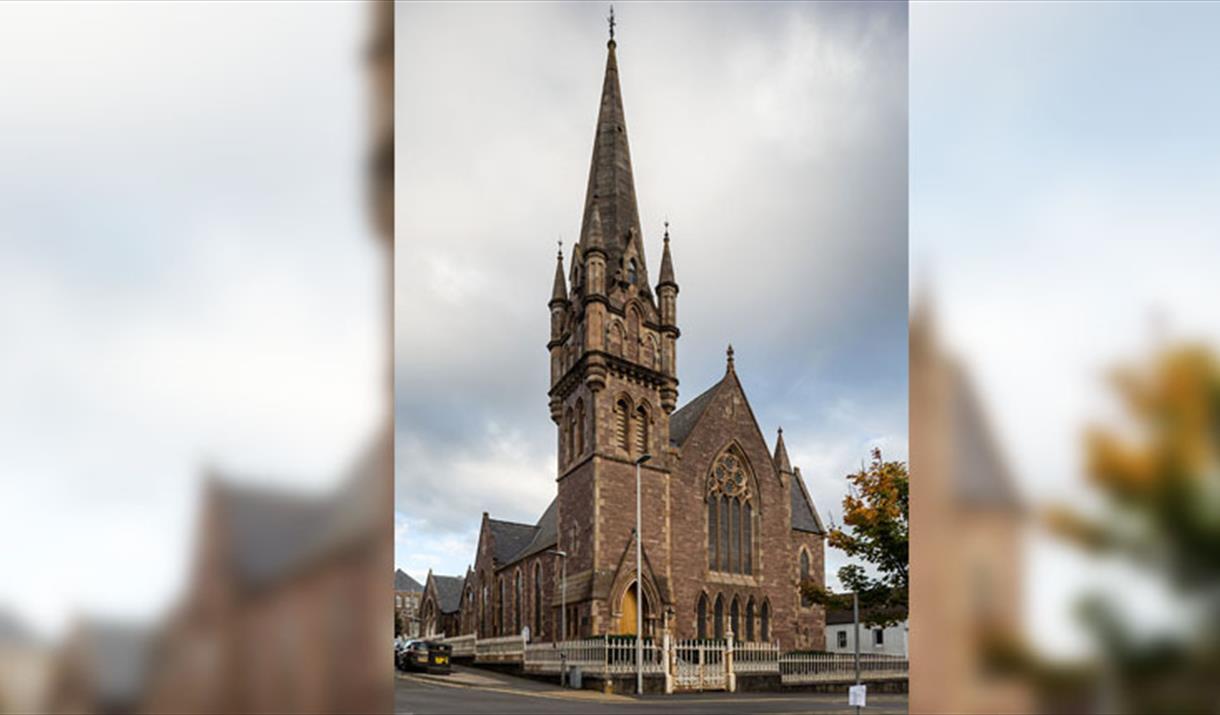
A Stornoway landmark, built in 1878. Martin’s Memorial Church was designed by RA Bryden. An imposing Gothic church, The hall, designed by John Robertson, was added to the rear in 1893 and the pinnacles and spire were added in 1911.
Recently Viewed
Taxis/Private Hire
Fitness & Leisure Centres
Architectural Trail
St Moluag’s Church is a 12th century Temple, said to have been built by the son of a Scandinavian…
Architectural Trail
Translated from Gaelic, Talla na Mara means the Centre by the sea. Overlooking Niseabost beach, the…
Monuments & Ruins
This Neolithic chambered cairn occupies a conspicuous position on a low hill overlooking Garrabost.…
Beach
Image: © Copyright Gordon Hatton and licensed for reuse under this Creative Commons Licence.
The…
An Lanntair’s award winning building, designed by Nicoll Russell Studios, is inspired by…
In The Blackhouse, MacNeil's bar on the corner of Cromwell Street and Francis Street was…
Embark on a guided tour that takes you through the timeline of the industrial history and…
A downloadable guide to galleries and retail outlets where visual art and craft, made in…
A downloadable 20 page guide to Stornoway. Navigate through a detailed map featuring…
Award winning Outer Hebrides photography. Visit our Stornoway gallery for fine art prints…
Hebridean Jewellery are manufacturers of sterling silver and gold jewellery from the…
Nicknamed “The Gaelic café” by locals, An Taigh Cèilidh is a Gaelic community centre with…
In 1263, King Haakon IV of Norway attempted to regain control of the Hebrides and Argyll…
The police station is where Detective Fin Macleod is based on his return to the island,…
Since our ancestors landed on the Hebrides over 8,000 years ago, sailing and boat…
Gaidhlig (Gaelic in English and pronounced gaalic not gaylic) remains the majority…
The Italianate Clocktower remains from the original elementary and infant school built in…
Gaelic translations to help you with the charts.
Built in 1847-51 in the Neo-Gothic style popular in the Victorian era by Sir James…


© Outer Hebrides Tourism (Trading) 2026. Registered in Scotland SC501113. All Rights Reserved
Ratings Powered By